In the Name of God, the Most Compassionate, the Most Merciful
With strength drawn from the Absolute Power of God, we begin this session.
Hello, friends. I am Hossein, a traveler and the session guardian.
(Audience responds: Hello, Hossein!)
I kindly ask everyone to observe fourteen seconds of silence to seek refuge in the Almighty and free ourselves from our greatest enemy—our own ignorance and unawareness.
(Fourteen seconds of silence observed)
Thank you, friends. I now request our esteemed secretary to provide a summary of the previous session and announce today’s agenda.
Hello, friends. My name is Farhad, and I am a traveler.
(Audience responds: Hello, Farhad!)
In the name of the Absolute Power of God, today the fifth session of the 86th round of Congress 60 workshops, dated November 5, 2025 is held with the agenda “Golrizan”. The session started under the guidance and supervision of Mr. Dezhakam and me Farhad as the secretary at 10:20 a.m.
(Audience applauds)
Hello friends, I’m Hossein, a traveler.
I hope you are all well; by the grace of God, I am fine too. Today is the 14th of Aban (November 5, 2025). It is now 10:27 a.m., and we are at the Academy building in Tehran.
I arrived ten to fifteen minutes late because of an extremely large crowd, but still, I left and came here. I still had work there, but I asked Amin to continue.
I’ll first mention a few points, and then move on to the agenda.
One point: we need to settle the matter of guides. We do not have a ‘first guide’ and a ‘second guide.” Someone stands up and comes with two guides beside him: ‘This is my first guide,’ and ‘This is my second guide.’ “I’ve given this example many times: you ask a woman, ‘Who is your husband?’ She says, ‘My first husband was so-and-so from university; now my husband is Mr. Akbar.’ You cannot have both (guides) at the same time. There is only one. Don’t try to be diplomatic or overly polite about it and tell your first guide to come just to keep him happy; give him a clear “No.” A pupil has only one guide at any given time—just as a woman has only one husband at a time.; she can’t have two husbands. A pupil can’t have two guides at a time; they only have one. By doing otherwise, you are pitting one guide against another. You tell your old guide to come, and at the same time you bring your new guide — you place the two of them in opposition. This is the worst and most improper thing you can do. By doing this, you ruin the guide; you put your guide in a bad position and undermine his role, because he comes in and there is someone else right beside him.
When you join a legion and you’ve been there for three months, your guide becomes that new guide. There is no longer any mention of the former guide — that chapter is closed. We’re not doing this for show, or for publicity, or for anything like that. This isn’t a movie where we say, “Put my name in the credits,” or a TV commercial. Therefore, if your guide changes and you move to another legion, according to the rules, once you’ve been there for three months and remained committed, your guide is the new one. Don’t bring anyone other than your current guide with you. If you go to an educational legion, the same rule applies. If you go to the X legion, the same. If you’re in the second journey, the same. The guide is only one. God is one, and the guide is one. Keep this in mind: if you try to bring two guides with you, you ruin both of them. It’s not appropriate, it’s not decent, and it’s very improper.
Another point: when someone becomes a Sardar, a Donor, a Pahlevan, or a Neshan-e Bi-Neshani, there is no required sequence. One does not need to first become Sardar, then Donor, then Pahlevan. A person may enter any of these positions directly.
Another point is about the Congress 60 logo. We have one logo with text around the border and another with text inside. The inner-text logo is for the official stamp, and the letterhead logo has ‘Justice’ at the top, ‘Knowledge’ and ‘Decency’ on the sides, with seven wheat spikes. We will announce it, inform you about it, and let you know to use it.
Furthermore, let me also mention that During Golrizan week, they may provide refreshments. They can spend 35,000 Tomans per member for pastries, cake, or fruit, and the financial department will fully cover the expense. However, we do not allow live music under any circumstances in any branch. Conditions are not suitable for such activities. There is a Persian proverb that says: “Go bring a hat, [but instead] he brings a head (Sometimes, when we tell people to do something small, they end up doing something much bigger.”). For this reason, we do not have this issue at all. The circumstances are simply not appropriate at this time. Therefore, you must also observe this rule. This week also coincides with Fatimiyya, which makes the matter even more sensitive. Therefore, there will be no live music.
And now, about the Money Donation (Golrizan): one of the best accomplishments in Congress 60 was that it became financially self-sufficient and no longer dependent on anyone.
Some years ago, we were sitting right here in this very building. I was sitting here one Wednesday when some officers from the Public Places Supervision Department — basically the security division — arrived. It used to be called “Public Places” even in the past. They told me, “You must leave this place and end the meeting.” I said, “Please let me finish the meeting; it will be over in fifteen minutes.” They said, “No, you cannot finish it. You must leave right now.” So, So I told everyone, ‘Go home,’ and dismissed the members. There had been a complaint filed against us; of course, it was not the government that complained. It wasn’t the government’s fault, nor was it the Drug Control Headquarters — they have always supported us. The tenant who lived on the upper floor of this building had filed the complaint against us. So, the police came, took everyone away, and sealed the building. They shut down Congress 60 and took us to the detention center. Anyway — that’s a whole other story. You should’ve been there (he says jokingly). They took me to the detention center. They also came to my home and took appliances, the television, the computer and all of it. After 54 days, they unsealed the place. During those 54 days, we were on the sidewalk. We would come in the morning to the sidewalk behind the hedges. where we had laid out a mat and set up a camping stove — not for smoking opium (jokingly), but for tea and such. Right there, we would make and drink tea, and we also provided counseling for the members there. We had no place to go. For example, some members would go to municipal buildings, but after a while, when the mayor or the person in charge of that place changed, they would come, take everything away, and expel the members from those places.
We went to Vanak Square, where there was a place with a gym on one side. We held our meetings there. The bodybuilders who came to work out would inject themselves with hormones and other substances to make their muscles bigger, and they would throw their used syringes around. Then they would accuse us, claiming that our members were injecting drugs — while in reality, it was the bodybuilders who were injecting. Even the manager of the gym was a hardcore drug user; he was the worst of them all. They kicked us out of that place too. Wherever we went, we would stay only a few days before they threw us out again.
We said to ourselves, "This won’t work; we must have our own place." " A gem that has left its shell is searched for by wanderers on the shore." [A classical Persian poetic verse, metaphorically expressing the pursuit of something invaluable from unlikely sources]. We have members who are strong, capable, aware, self-sacrificing, understanding, and well-educated. Why would we need financial help from outsiders? Why rely on donors' money? Why go to other places? For example, when we wanted to hold Iftar during Ramadan, it wasn’t possible. For a while, we were in a cultural center, but we couldn’t hold Iftar there. They would say, "No! You cannot hold Iftar. You must come and leave at specific times," or, "Today is a holiday; you are not allowed to enter this place." The problems were countless.
The first place we managed to secure for ourselves was a zurkhaneh (a traditional gym) in Robat Karim, where we began holding our meetings. But after a while, even they asked us to leave. I said, “Go look around — through the municipality, anywhere you can — and find us a place.” Some members went searching and came back saying, “Mr. Dezhakam, we’ve found a place. The place is fine, but its name is the problem.” I said, “What do you mean the name is bad?” They said, “It’s a ghassalkhāneh — a washing room for the dead, basically a mortuary.” They said, “They’ve built a place there where they wash the bodies, and they’re willing to give that to us. There’s nowhere else.” I said, “Go take it. In fact—forget that— If they offer you even a grave, take it!” (he said jokingly). Of course, no bodies had been washed there yet — they planned to use it later. But everything was fully set up for a mortuary. We went there, gathered the things, and we cleared out the washing platforms, reorganized everything, and turned it into a proper hall. After some time, they told us we had to leave that place too — despite all the money, gardening, and work we had put into it.
In Karaj too, we were in a basement that used to be a swimming pool. We renovated it, and again they told us to leave. Every day there was a new problem for us to deal with. Then I said, “Pack up — let’s go. Leave everything; it all belongs to them.” Why did I say that? Because our financial situation was starting to improve, since we finally had our own place. If we hadn’t had our own places, we would have been forced to stay and endure that situation. And how did all of this come about? Now, in most cities, we have our own locations (Congress 60 branches). And how did all of this become possible? Through your efforts — through the Sardar Legions, the Donor Legions, the Pahlavan Legions. These are the groups that have made these facilities possible.
Currently, including the parks, we have approximately 180 branches. If each branch has just one Pahlavan, that alone becomes 108 billion Tomans. But someone who wants to become a Pahlavan must be financially capable. One of the conditions is that they must own a house, their financial situation must be solid, and they must have the capability to do this. A lady came to me and said, "I want to become a Pahlavan." I asked, "How?" She said, "I bought gold previously, and now the price of gold has gone up. I want to sell it to become a Pahlavan." I told her, “No — I can’t let you sell your gold.”. No woman is allowed to sell her gold to become a Pahlavan or a Donor. No! You shouldn't do that. A person must be able to pay this money easily. It should be as easy and natural as setting this pen down on the table. Now, if they occasionally have a minor shortfall, it's not a problem. But someone who lacks the necessary means ends up putting pressure on their home, their family, their children — everyone. So such a person shouldn’t do this. That’s why, before someone becomes a Pahlevan [by donating 600000000 Tomans or 500 dollars], I interview them. Some people insist a lot—some even cry and say, “Sir, please allow me.”and I tell them, “I still can’t allow it.” I can only give permission when you have a strong and reliable financial foundation.
Another point is this: we don’t need publicity, and the Pahlevans do not want to be promoted or advertised. Someone once did something that caused damage to the Congress 60 system. He had posted the photo of a person who had made a financial contribution to Congress 60 on social media, with a caption saying, “On behalf of all Congress 60 members, on earth and in the heavens, I thank you.” I told him, “Who gave you the permission to write such a text? Who do you think you are to express thanks on behalf of the earth and the heavens? It’s NOT your place! If you want to thank him, thank him from yourself and that’s it.”
So don’t ever do things like posting photos on the website, putting on a special shawl, and taking pictures—no! We don’t do any of that in Congress 60 at all. Even if no one else knows, God and the labor of your own hands know. That is enough: no one needs to know—God knows, and the labor of your hands. When Golrizan week begins, if I come here every year and kick things off myself and announce before everyone that I am contributing this amount, it is not because I want to show off. It is because I am your role model—so that you know even I, who am at the head of Congress 60, am doing this as well. I only show my own contribution to convey the message of generosity, so that the members know that even Mr. Hossein Dezhakam himself donates money, and so that others may learn from him, look at his example, emulate his actions, and put them into practice. That is the reason—not because I want to promote myself. Why would I want to promote myself?
All of us in Congress60—whether we hold the title of Pahlevan or Neshan-e Bi-Neshani [Badge of Anonymity], or in any other position—if we are to be fair and compare, we see that what we have given is still little compared to what we have received. We have received something, and we are paying something back. As for myself, if Congress60 didn’t exist, I might have been dead for many years by now—I’m serious, I’m not joking. So, Congress 60 gave me life. When will I ever be able to repay that? How could I ever compensate for it? If I give just a small amount of money, does that mean I’ve done something great? Not at all. It’s nothing. And when members come to get permission to donate for receiving the Pahlevan title or the Neshan-e Bi-Neshani, I set a condition for them and say: “for what you are doing, you must not expect anything in return—no expectations, no demands, no requests, no desire, no want — neither from God nor from His servants. It should be as if you threw your money into a river. If you accept this condition, then go ahead! But if you don’t accept it, then don’t do it. Someone might say, “Now that I’m a Pahlevan, starting tomorrow everyone in the branch must bow to me.” Absolutely not! We have nothing like that here.
This is something you do from the heart — for your own inner fulfillment, just like Congress 60, which welcomes and treats everyone—does it expect anything from them? Not at all. They reach liberation and go on with their own life — they’re free to go as they wish; they may even not put even a single coin in the donation basket, and no one will confront them or say, “Why didn’t you contribute?” No one bothers them at all. This is exactly what the saying means: “The lover acts for the sake of love; the beloved owes nothing in return.” A guide serves their pupils and helps them achieve liberation from addiction. The guide doesn’t expect anything from the pupil, doesn’t keep score, and will not later boast, “I cured you, you were down in the gutter, and I helped you.” There is no room for “I” at all. It is the guide’s love, the genuine desire to help another human being, that gives them energy, and that is enough. Life and the universe are designed in such a way that the right response will come at the right time.
Why do I say you should have no expectations? Because otherwise it turns into a transaction. Some say: “I will sacrifice a sheep so my cancer will be cured.” Your treatment may cost two billion tomans, and you think a 20-million-toman sheep will solve it? No! Or, "If I pass the university entrance exam, I will do such and such." These are transactional bargains with life. You give something only to get something in return. You want to give very little and receive something much greater. You must have no expectations—only then will you be at ease, only then will you have peace of mind, and only then will you achieve the result. So, we have been able to stand on our own feet and become self-reliant through this spirit of cooperation among the members.
Not that we want to receive money from abroad, either. Many people wanted to send us money from outside the country, but We didn’t go along with it. Yesterday, some senior bank officials came to see us because of recent changes in the banking system. We told them: “We have 6,000 euros in Bank 25 Shahrivar, Haft-Tir. Since when? Since 24–25 years ago! When we were working with European NGOs. We deposited it in the bank, and we never touched it. That 6,000 euros is still in the bank. I hope it’s still there (laughs). We haven’t touched it at all, because it came from an external source, and we haven’t spent a single cent of it— simply because we never needed to, but even if we had needed it, we still wouldn’t have used it. Otherwise, we would have to answer for it later if someone asked, ‘Why did you take this 6,000 euros? What did you do with it?’ We simply say: ‘Yes, we received it—but we haven’t touched it to this day.’
About 20 to 25 years ago, we were being offered four hundred thousand euros from abroad—four hundred thousand euros over five years, meaning 80,000 euros per year—but we didn’t accept. They said, “We’ll give you sports equipment, archery sets, supplies—you name it” I said, “We don’t want that. You can offer us spiritual or scientific support, but we don’t need financial assistance.” We don’t need benefactors at all. Accepting help from the outside is simply inappropriate for us, because drug users are not necessarily poor. Yes, most of them smoke, and smoking isn’t good, but they spend a considerable amount on cigarettes every day. It’s no joke; it’s as if they’re literally burning money. Someone using heroin might as well be rolling up a 50,000-tomān bill and set it on fire. It’s the same for those who use or smoke opium—they’re constantly burning through cash. So, someone who becomes addicted needs to have guts (laughs). Now that it’s just us here, let’s praise ourselves a little (jokingly). Funding a drug habit is no small matter. Someone might need to spend 200,000 tomans a day on heroin. Who can simply part with 200,000 tomans like that?
For example, there are people who have been smoking for 20 years but still don’t dare to buy a single pack of cigarettes for themselves. They always bumming cigarettes off others, and wherever they are, they say, “Give me a cigarette.” People jokingly call it “the plug of kindness is open” (laughs). So, what I’m trying to say is this: people who consume (drugs/tobacco) are not necessarily poor, miserable, or wretched individuals. They are capable people, and if their abilities and potential are Properly channeled, we can achieve the best results and do the best things. What we do at Congress 60 is unique in the world; there is nothing quite like it. Especially when it comes to the financial contributions made by members—it's almost unbelievable how selflessly they act. A product must be valuable to be tradable, and the “Product” of Congress 60 (referring to addiction cure) is highly valuable, and it has eager supporters. Not a single cent of Congress 60’s financial resources or property belongs to me personally. All of Congress 60’s assets and funds belong entirely to the organization itself. All the lands, properties, and buildings everywhere are registered under Congress 60, preserved for future generations. So far, we have been able to cooperate very well and accomplish our work successfully.
Since the day we founded Congress 60, not even a single day has passed where we were without money, although we faced many difficulties in the beginning. Mr. Majid Salami, who is sitting at the end of the hall now, remembers—we couldn't even afford to buy a pot of ash (traditional soup) for seven people. Today, in Congress 60, Buying anything on installment, credit, or loan is forbidden., buying on loan is forbidden, post-dating a bank check is forbidden. The accounting department is not allowed to write a check today and date it for tomorrow. Checks must be dated for the same day. For the past 25 to 26 years, we have operated this way. Except for the first one or two years of Congress 60’s early days, not a single day has passed where the bank called us to say our account had insufficient funds to cover a check. Not a single check has ever bounced. Not once have we bought anything on installment. Even for this very building, about 10-12 years ago, water utility issued a 12 million toman bill. 12 million Tomans back then was a lot of money. The water department said we could pay the 12 million Tomans in installments. I told Majid, "No! Go pay the full amount in cash. We don't have the patience to pay installments every month or deal with all that hassle." They paid the whole amount in full, and from that day until now, there hasn't been a single day when we didn’t have enough money. Why is that? It’s because of you, the members. It's because of the members of Congress 60. They are the ones who build and maintain this place. Prosperous residents build up ruined lands, but ruined residents destroy prosperous lands.
In Congress 60—whether someone is a Sardar, a Pahlevan, or a Donor (these are fundraising ranks)—each person is doing their part with their financial support to help build something real and lasting. And we have plenty of people like that. Honestly, just one Pahlevan in each branch is enough; that one person sets the tone. One is all it takes. And because of even that one person, God doesn’t hold back His grace from us. This week is a really special week. And whatever amount you decide to give, it has to be given with absolutely no strings attached. That is true spirituality. If there’s even a hint of expectation—if you’re thinking, “I’ll donate this money so my own problems get fixed”—then honestly, don’t do it. Don’t give at all. Just say, “I’m giving—simply to give. I’m giving so that someone else can get better.” So many families were on the edge of falling apart—or had already fallen apart—but in Congress 60 they found their way back together. Thousands and thousands of families, there were so many people whose homes were on the verge of being destroyed, yet here they reunited and rebuilt their lives. Smiles came back to their faces. They learned to value one another again. They walked out of courthouse hallways and returned to their homes.
So, we have many examples like this. I hope we can do this well during this special week. I would like to take a moment to thank Alireza Zarkesh, who serves as the Watchman of the Sardar Legion and has been working extremely hard. We also thank and appreciate the financial Dideban (watchman), Mr. Salami, and the other members of the financial team, who carefully handle all the finances. We can achieve all this because we have a strong financial foundation and strong Sardar Legions backing us. Let me make the first contribution. Mr. Majid Salami, please come forward. As always, I will offer my donation to him. As I do every year, I will present my contribution to him. Bring him a chair.
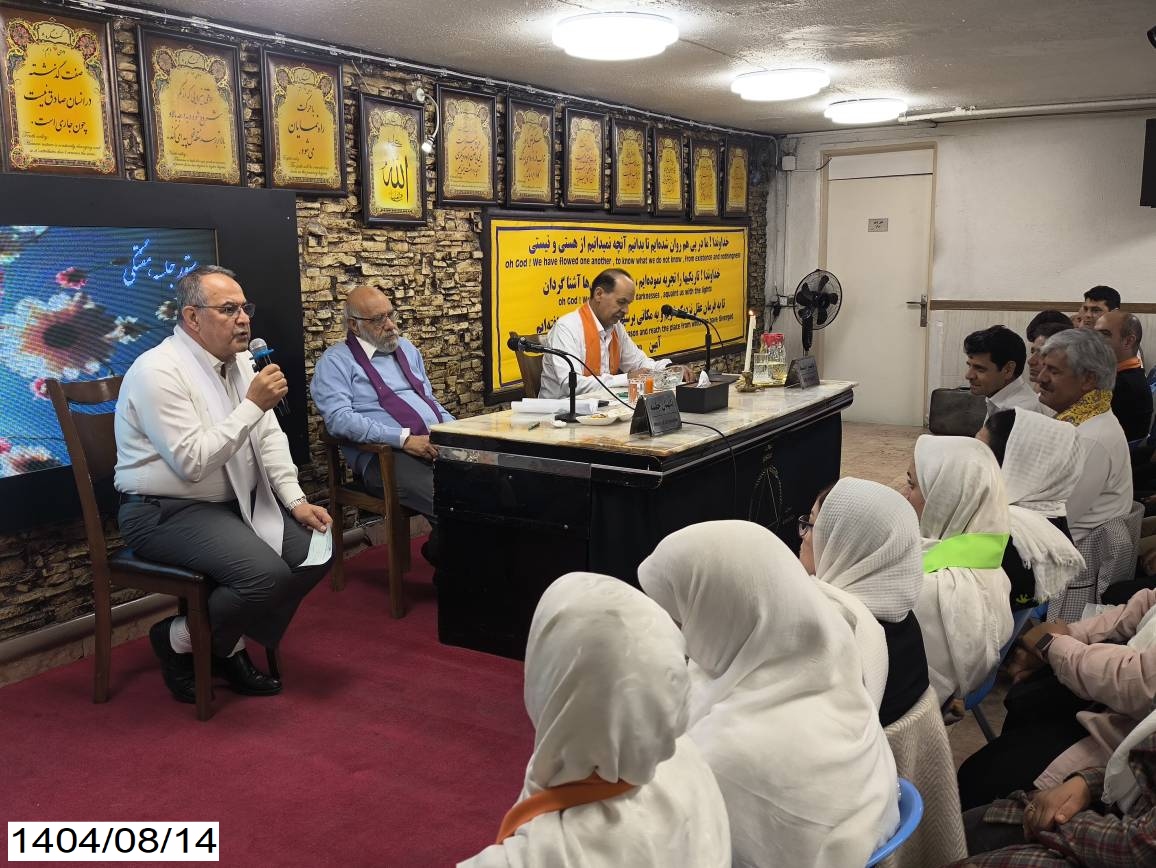
Speech by Traveler Majid Salami, the Respected Financial Dideban of Congress 60:
Hello friends, I am Majid, a traveler. First of all, I would like to thank Mr. Dezhakam for giving me the opportunity to speak. In previous years, he would hand me the check and say, “Go quickly!” (laughing). This year he actually gave me time to speak — just joking! I always make my contribution every year; I ask Mr. Dezhakam for permission and he always allows me to participate. Well, I congratulate Mr. Dezhakam, all members of Congress 60, and all its generous benefactors on the Week of Golrizan—those who gave from their own wealth to support this organization. I said this in a meeting, and I’ll say it here too: Mr. Dezhakam not only led us out the darkness of addiction, but he also taught us how to live. And today, through his action, he is teaching us the lesson of generosity. For 25 years, I have had the honor of being a pupil of Mr. Dezhakam and working closely with him. I have never seen him ask anyone to do something that he hasn’t already done himself beforehand. That is he has already practiced giving for many years before asking anyone else. Since I am involved in financial affairs, I am aware of the details. Perhaps many people did not know this, but Mr. Dezhakam has always been generous toward Congress 60 and has supported it financially. At a time when one million tomans was considered a lot of money — a time when many people didn’t dare to donate, or could only manage it once — he donated one million tomans every single week for years. This was long before the Sardar Legions and other structures existed. He always has a saying: “The honor of knowledge is in its practice.” Today he has once again shown us, through his actions, what the true practice of generosity looks like. He has taught us that we must give — so that we may be worthy of God’s generosity and forgiveness toward us. Thank you, sir. May God bless you and keep your supportive presence above us always. We hope to continue learning from you.
The amount of Mr. Dezhakam’s check is three billion tomans (about 23000 USD).
Mr. Dezhakam:
Thank you very much. Well, the check is a bank check — hopefully it won’t bounce (laughingly). Mr. Zarkesh, please come here and share a few words with us for a couple of minutes.
Speech by Traveler Alireza Zarkesh, the Respected Sardar Legions’ Dideban of Congress 60:
Hello friends, I am Alireza, a traveler. When Mr. Dezhakam speaks, he leaves no room for doubt; he clarifies the matter from the very beginning to the end for a traveler who is about to start their journey. When the Week of Golrizan arrives, Mr. Dezhakam brings up the story of Ayaz. He says: “I remember when we couldn’t even afford bread and cheese in Congress 60. Alireza, do you remember? Do you remember the condition you were in when you first came and sat at the back of the hall with a dead heart—and how Congress 60 brought you back to life? From that lifeless heart, it pulled out a living soul, and today you are moving forward like this. Do you remember?” Yes, I remember. When the month of Aban (second month of autumn in Persian calendar) arrives, farmers plant wheat. They reach into their sacks and scatter their own wheat onto the ground. And as they move on, they never look back—because they have faith that, by God’s command, for every single grain, seventy will be given to them. May God never leave any nation without a leader or guide. Last Friday, Mr. Dezhakam said that he has written a new book which, after publication, is planned to be promoted everywhere, even on satellite channels, to be presented to the world and made available to everyone. But for the Congress 60 members (to participate in the auction), each person needs to contribute twenty million tomans. This is a platform that Mr. Dezhakam provides—under his name, but for our benefit—so that we can all make this happen together. I know that when the pillar of a person’s faith starts to move, the hardship of the journey becomes easier for a traveler. And the services that Mr. Dezhakam allows us to perform are the very reason why a traveler who enters Congress 60 in a broken state can come into this space that we have all built together, and experience the same joy and healing that he once experienced himself. I am just an employee—but believe it or not, I live like a CEO. All of this is a blessing from the knowledge that exists in Congress 60. Through Mr. Dezhakam’s honor, we become honorable. Through his art, we become artists. Throuh his knowledge, we become knowledgeable. And today, through the wealth of Congress 60, we must become wealthy. This is what I believe. And I am grateful to Mr. Dezhakam for his greatness—for allowing this seed to be planted within me, Alireza, giving me this shelter and this sufficient strength to move forward. In any case, I congratulate all of you dear friends and I hope that our Golrizan celebration will be a wonderful one. I know all the branches are prepared, and we all want to enjoy this event. Mr. Dezhakam asks, ‘Have you seen generosity in both small and large measures?’ At first, he says he hasn’t, then he says, ‘I have seen it. Have you?’ He gives an example: an employee with a monthly income of 30 million Tomans, who saves 5 million and donates 1 million to Congress 60. ‘I have seen it,’ he says. ‘Have you?’
Thank you very much, Mr. Dezhakam. Thank you. Please give a round of applause in honor of Mr. Dezhakam.
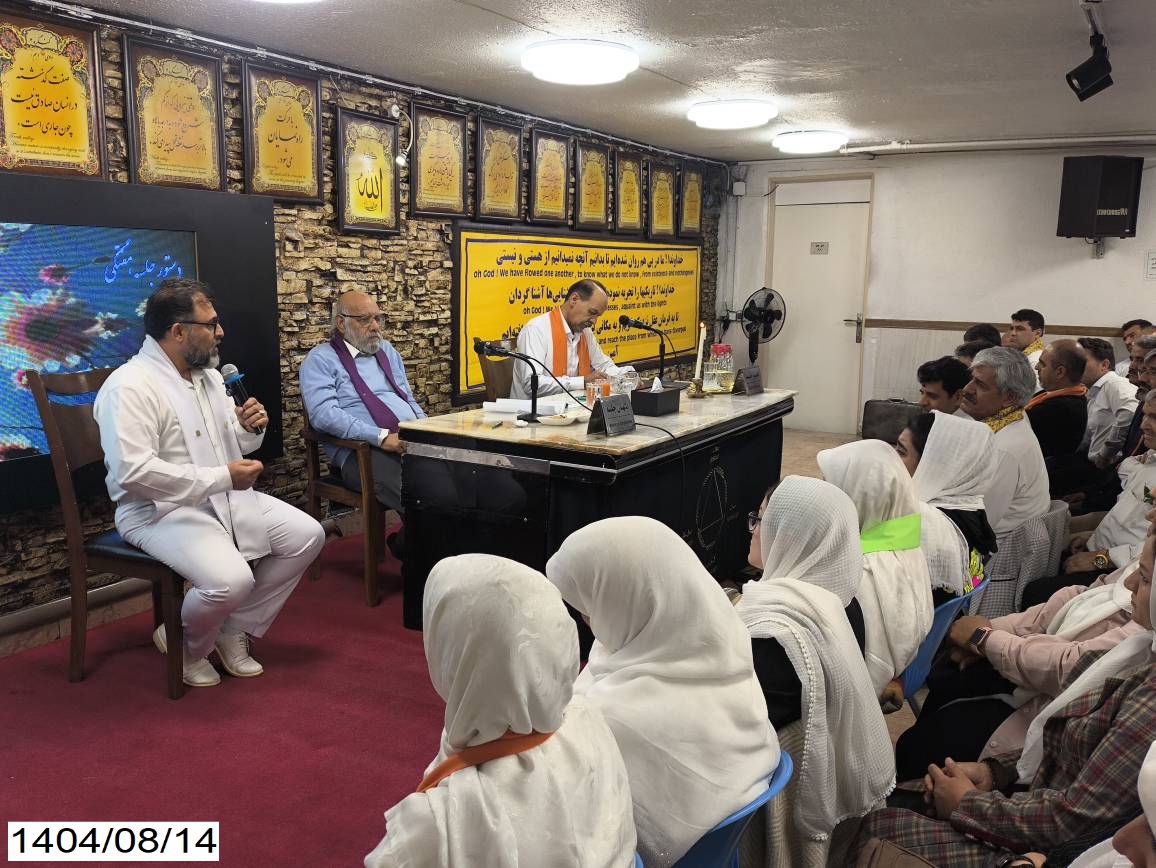
Mr. Dezhakam:
Thank you. Let me clarify something here: I didn’t say that all Congress 60 members must pay 20 million Tomans for a book I have written. I said I put the book up for an unveiling ceremony—I do this for every book I write. I put one copy of that t book up for auction to be sold. M latest book, “How Are You?” was put up for auction a few years ago and sold for 360 million Tomans. I said that only those who want to participate in the auction must contribute 20 million Tomans. So, what was the reason for this? It’s all based on experience. In life we sometimes encounter problems—it’s a learning experience. We put the books “Edmund and Helga” up for auction in Taleghani Park. Someone came, offered the highest bid, and then simply left. They just threw out a random bid and then disappeared. That’s why I said: anyone who wants to participate in the auction should contribute 20 million Tomans first, then join the auction—so that people in the crowd don’t randomly raise their hands and bid a number without any real intention or commitment. That was the reason—not that all of you must pay 20 million Tomans. Thank you very much.
Now, a few of Pahlevans—one or two—please come here and say a few words.
Thank you. There are many Pahlevans in the meeting, but we don’t have enough time. As a token, two of them have spoken on behalf of the others.
Furthermore, let me also say something about the Neshan-e Bi-Neshani [Badge of Anonymity]. Its name suggests a sign, yet it has no sign—meaning no one should know that you have made this contribution or paid this amount. The minimum amount for the Neshan-e Bi-Neshani starts from 3 billion Tomans today. Of course, those who previously received my permission are not subject to this new rule. Anyone who wants to get Neshan-e Bi-Neshani position and is willing to contribute at least 3 billion Tomans can speak with me, get permission, and pay; then I will present them a badge. It is a special badge, like a shawl (special shawl for Pahlevans) that I personally present to them—but it will not be displayed publicly like a shawl used to be. This point was also mentioned just for your information.
Dear friends, the Golrizan celebration will officially start on Saturday. No one can celebrate earlier—so it cannot be held on Friday or any day before Saturday. Nobody can start early, whether it’s Archery Club (of Congress 60), Music Legions, or sports groups—no! The most effective way is to make contributions through your own branch If you wish, you can also contribute to another branch, but the official celebration starts on Saturday, not on this Thursday or Friday.
Typed by: Companion Fatemeh Kh.
Translated by companion Sepideh, Sheikhbahaei branch of Congress 60, Isfahan, Iran
2025/9/11
Revised by: Companion Marjan
https://congress60.org/News/457033/%DA%A9%D8%A7%D8%B1%DA%AF%D8%A7%D9%87-%D8%A2%D9%85%D9%88%D8%B2%D8%B4%DB%8C-%D8%AC%D9%87%D8%A7%D9%86%E2%80%8C%D8%A8%DB%8C%D9%86%DB%8C-%DA%AF%D9%84%D8%B1%DB%8C%D8%B2%D8%A7%D9%86